A lost card is one moment for the customer, and four org charts for the bank.
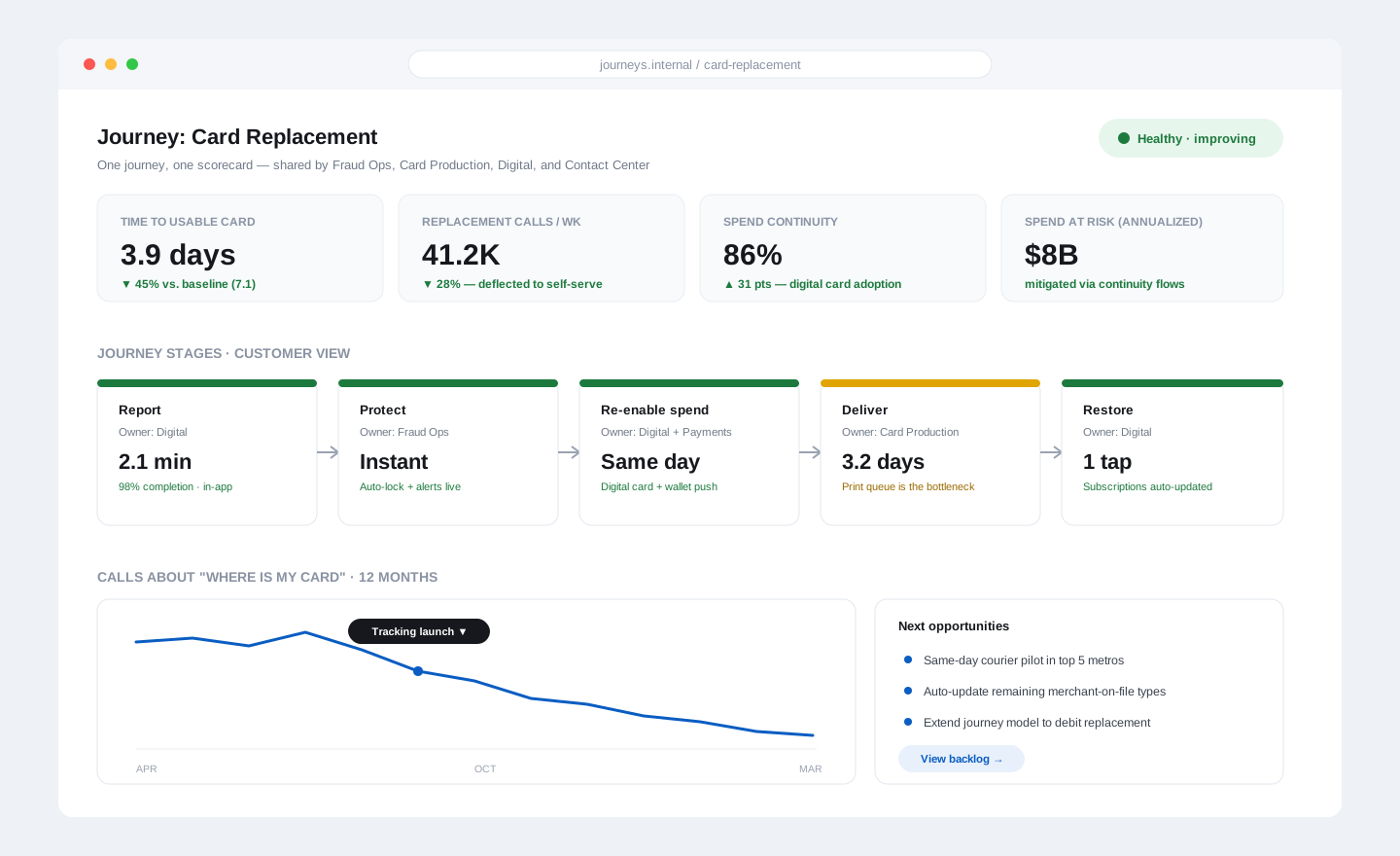
I helped build a Customer Journey Management program at JPMorgan Chase that unified fraud, production, digital, and contact-center teams around one journey and one scorecard, then redesigned the replacement experience it measured. Replacement time fell 45%.
The problem
When a customer loses a card, they experience one continuous anxiety: can I still pay for things? Inside the bank, that single moment was split across four organizations. Fraud operations locked the card, card production printed it, digital showed its status, and the contact center absorbed every gap in between. Each team hit its own targets. The customer still waited a week, and "where is my card?" was one of the highest-volume call drivers.
The deeper cost was invisible: every day a customer couldn't spend was revenue that quietly migrated to whatever card was next in their wallet. Annualized across the portfolio, that spend-at-risk reached $8 billion.
Reframing: manage the journey, not the departments
The program's core move was organizational, expressed through design: we mapped the journey as the customer lives it (report, protect, re-enable spend, deliver, restore), assigned a single accountable owner to each stage, and built a shared scorecard where the only metrics that counted were customer-side ones: time to a usable card, spend continuity, calls per replacement.
Redesigning the moment itself
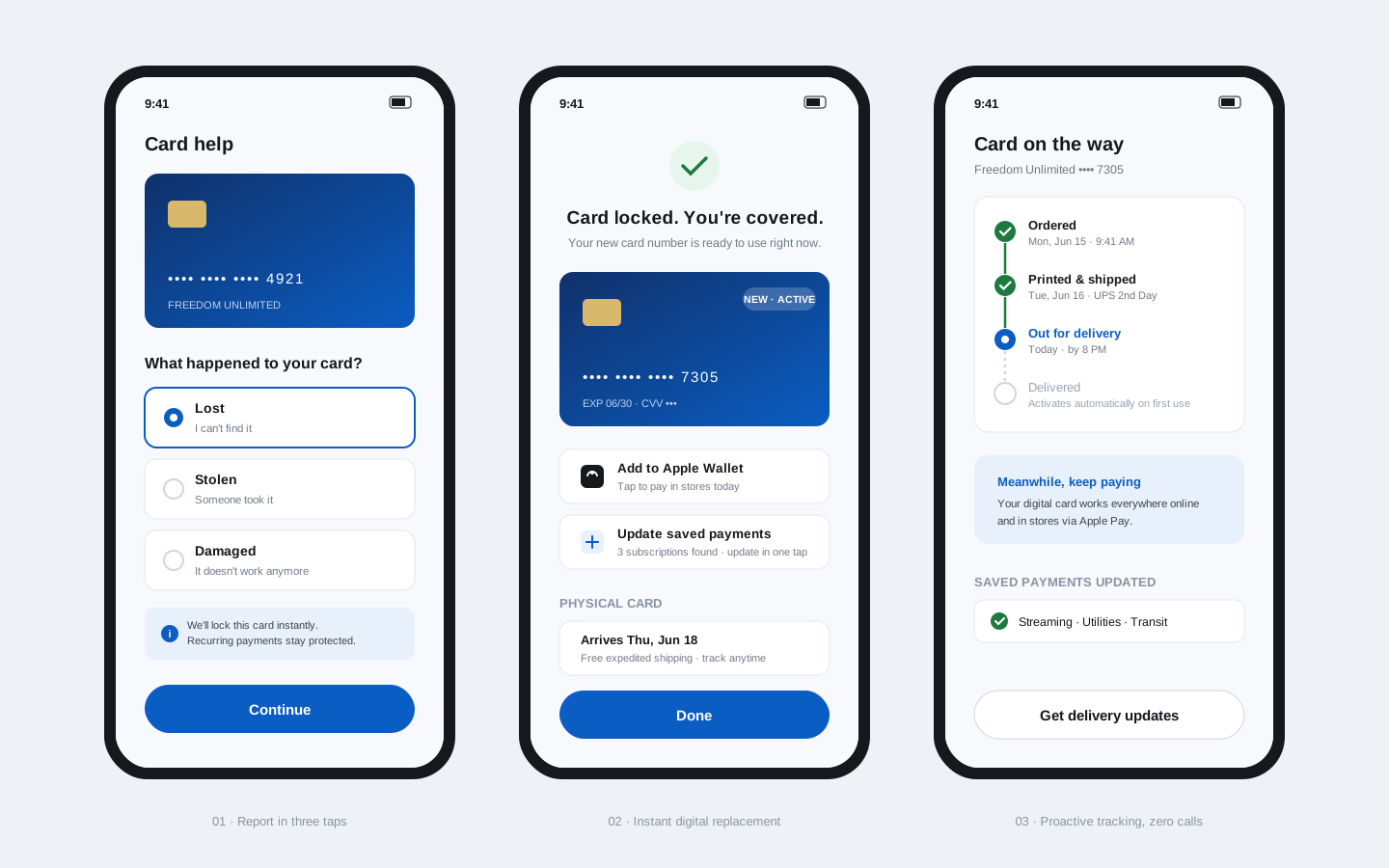
With the journey instrumented, the experience redesign had a clear thesis: separate "protect me" from "let me spend." Locking the old card and issuing a usable number don't need to wait for plastic.
- Report in three taps. Plain-language triage, instant lock, and explicit reassurance that recurring payments survive.
- Spend again the same day. A digital replacement number is issued immediately, pushed to the wallet, and saved payments are updated in one tap.
- Track it like a package. Proactive shipping states with dates and a delivery window, designed deliberately against the call driver data, so the app answers the question before the customer dials.
Outcome
These mockups are recreations made for this portfolio. Data, copy, and visual details have been altered to honor confidentiality; the interaction patterns and outcomes are representative of the shipped work.